Your cart is empty


Total: 2684
/
2684

Learn about the society and economy of the United States of America.

Learn about mercury and its most important compounds.
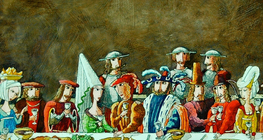
Learn what medieval European people ate and how they prepared their meals.

Learn about interesting topics in number theory.
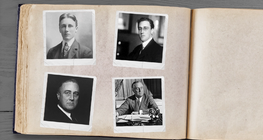
Learn about Franklin D. Roosevelt, one of the most popular presidents in the history of the United States.
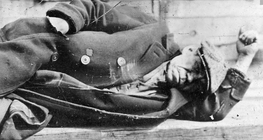
Learn about the history of the global economic depression that began in 1929.
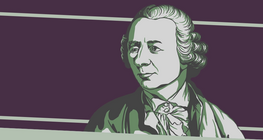
Euler is one of the most outstanding figures in the history of science.
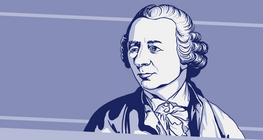
Euler is one of the most outstanding figures in the history of science.
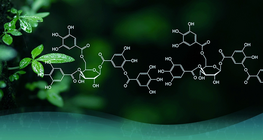
In this lesson, you can learn about how organic chemistry developed and what it studies.

In this lesson, you can learn about fictitious and real frogs.
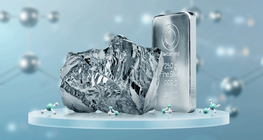
Silver is the most widely produced and used precious metal and a good electrical conductor.
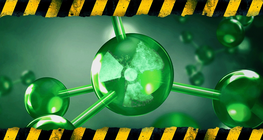
Learn about the radioactive decay law and its fields of use.

In this lesson, you will learn about globalisation.

See some experiments that can be used to identify the components of organic compounds.
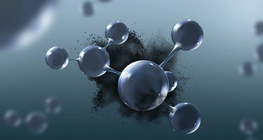
Due to their special properties, carbon atoms can combine in unlimited numbers and form the base of organic compounds.

Why is the atomic nucleus considered to be positively charged and the electron cloud, negatively charged?

Learn about Ignaz Semmelweis, a celebrated Hungarian physician of the 19th century, often referred to as 'the saviour of mothers'.
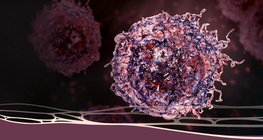
Learn about cancer, the second leading cause of death in the world.

Take a glimpse into the brutal world of ancient Roman gladiators.
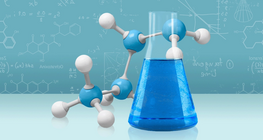
Organic substances can be grouped by various criteria, which helps to identify and get to know these substances.

Learn about the characteristics and economic significance of methane as well as the sources and consequences of its emission.

Learn about Alan Turing, a pioneer in computer science.
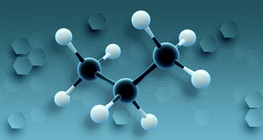
You can learn about the molecule structure and nomenclature of saturated hydrocarbons.
You can learn about one of the most significant poets, novelists and playwrights of French Romanticism.