سلتك فارغة


المجموع: 2373
/
2373

Demonstrating how period is effected by the pendulum length. Learning and verifying the mathematical formula too.

Determining free-fall acceleration by measuring the periods of pendulums
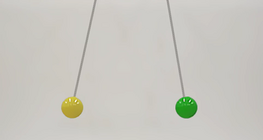
Damping of the pendulum is caused by air-drag. Air-drag depends on the shape, size and square of velocity of a moving object.

Compare the amount by which the amplitude changes at the beginning and at the end of the motion.
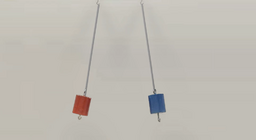
Investigating the amplitudes in a coupled oscillation.

Investigating the motion of the cyclist using its position-time and velocity-time graphs

Determining speed using the position-time graph
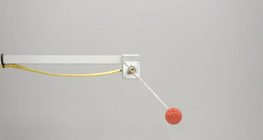
Investigating the horizontal and vertical projection of a uniform circular motion
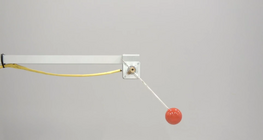
Investigating the horizontal and vertical projection of a uniform circular motion

Showing the relationship of the uniform circular motion with simple harmonic motion
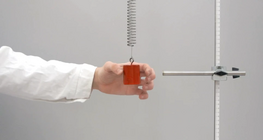
Investigating the parameters describing the motion of an object suspended on a spring
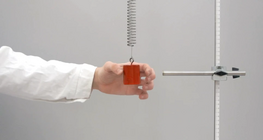
Investigating the position-time, velocity-time and acceleration-time graphs and their relationships.
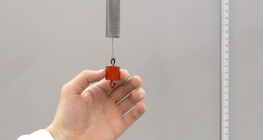
Investigating the relationship between the period of oscilation and mass with experiment
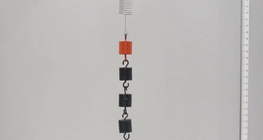
Writing a mathematical formula for dependence of period of oscillation on mass
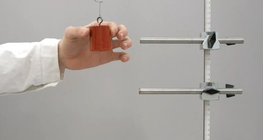
Investigating the relationship between the period of oscillation and amplitude with experiment
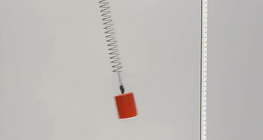
What kind of motion can be the resultant of two perpendicular oscillation?
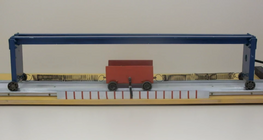
Demonstration of uniformly damped oscillation
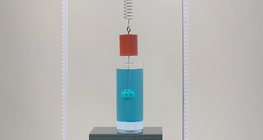
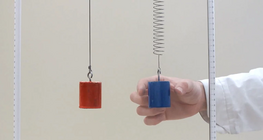
Using the position- time graphs of the objects to compare their motions
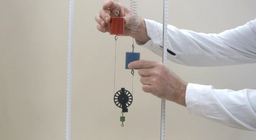
Using of principle of independence of movements
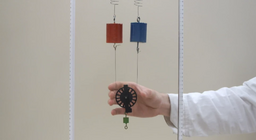
Demonstration of beats and using of principle of independence of movements
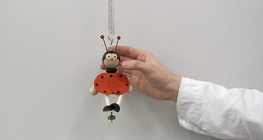
By looking at the period as the function of mass, investigate how the period depends on mass.
Show through experiment the square root mass dependece of the period.
Experimental determination of amplitude and the period of oscillation